Municipal bulk trash services across the City of Atlanta enforce strict volume caps and rigid monthly pickup calendars, routinely rejecting construction waste, major cabinetry tear-outs, and whole-house contents left…
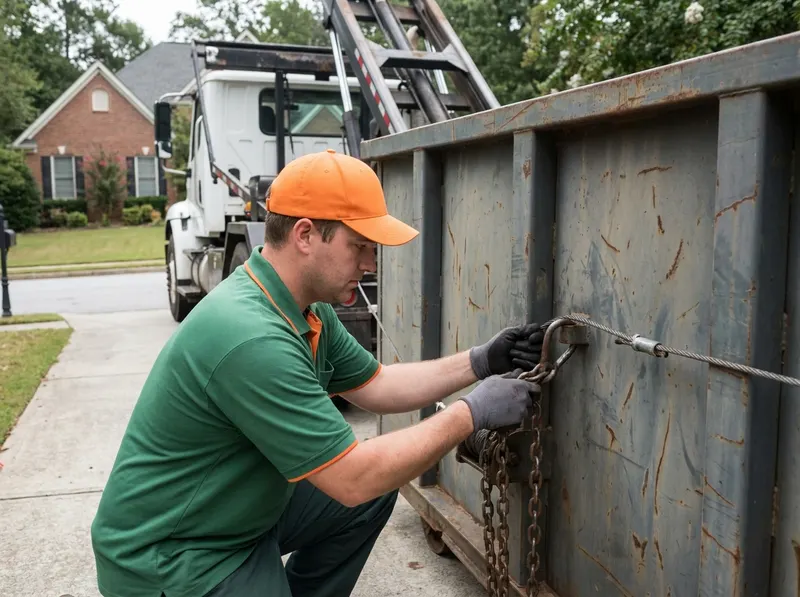
Municipal bulk trash services across the City of Atlanta enforce strict volume caps and rigid monthly pickup calendars, routinely rejecting construction waste, major cabinetry tear-outs, and whole-house contents left at the curb. When a property produces dozens of cubic yards of waste, hauling debris in personal pickup beds requires 9 to 12 separate round trips to municipal transfer facilities like the Chadwick Road Landfill or Merk Miles Transfer Station, burning valuable work hours and incurring gate disposal minimums on each pass. A 30-yard roll-off container provides 30 cubic yards of volume, the capacity of roughly 12 to 14 standard six-foot pickup truck beds, measured at 22 feet long, 8 feet wide, and 6 feet high. This volume suits whole-home estate liquidations in Buckhead, multi-room drywall demolitions in Midtown, and complete roof replacements along residential streets in Virginia-Highland and Inman Park.
The trade-off between container sizes centers on physical footprint versus hauling frequency. Choosing a smaller 20-yard dumpster saves four feet of driveway length but risks requiring a mid-project empty-and-return haul, which introduces a second placement charge and delays active labor crews. Conversely, a 30-yard bin demands an unobstructed 60-foot pull-in clearance for the delivery truck and six feet of vertical sidewall clearance, meaning homeowners must carry heavy items through the swinging rear door rather than lifting debris over the high exterior sides. If the project involves solely dense, heavy aggregate such as poured foundation concrete, red clay, or solid brick from an Old Fourth Ward hardscape removal, a smaller 10-yard container is the technically correct choice to prevent exceeding Georgia Department of Transportation commercial vehicle roadway weight limits.
Placement logistics require intentional planning on historic Atlanta properties. Narrow residential avenues, low-hanging water oak branches, and sloped driveways common to Collier Hills, Grant Park, and Cabbagetown require a spotter during drop-off. Containers set on private concrete or asphalt surfaces rest on heavy protective wood planks to distribute the container's steel wheel weight evenly, safeguarding private driveways from surface scratching or structural cracking. In West End or Kirkwood, where short private driveways may leave the container edge crossing a public right-of-way or sidewalk, local municipal street-use permits from the Atlanta Department of Transportation may be mandatory prior to morning delivery. Daily rental extensions can be arranged if an estate cleanout requires additional sorting time, ensuring neighborhood code enforcement citations remain avoided.
Every job gets a firm, written price after a free on-site visit.
Tell us about your 30-yard roll-off container service job in Atlanta and we'll send a clear, written quote, usually the same day.
 Bayview Dumpster Rental