Municipal trash crews through the City of Atlanta Department of Public Works limit standard residential cart service to 96 gallons per week and require rigid scheduling for bulk items, often declining mixed renovation…
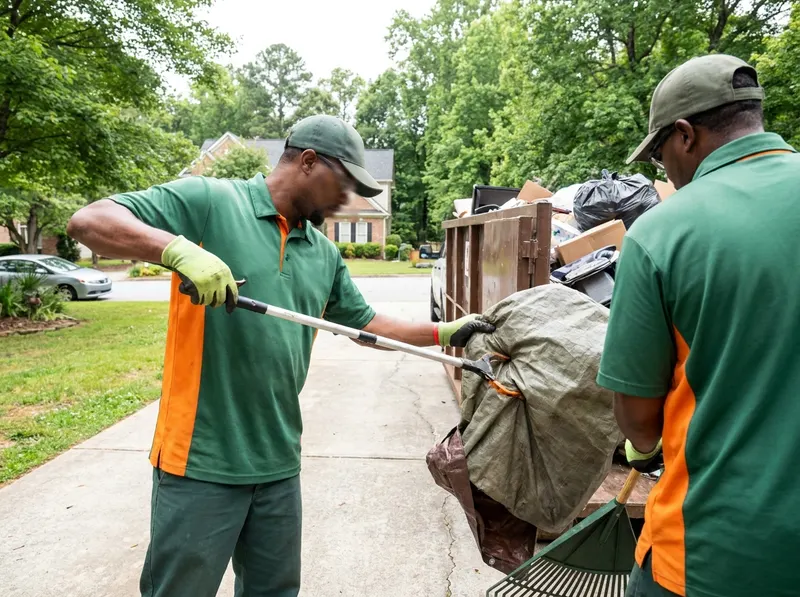
Municipal trash crews through the City of Atlanta Department of Public Works limit standard residential cart service to 96 gallons per week and require rigid scheduling for bulk items, often declining mixed renovation materials entirely. Scheduled overflow waste pickup resolves this threshold issue when home cleanouts create immediate pile-ups in driveways along DeKalb Avenue in Kirkwood or tight shared lanes in Cabbagetown. Rather than spending four hours idling in line at the Merk Miles Transfer Station or braving multiple rounds in a pickup truck down I-20, a dedicated residential roll-off delivers an enclosed staging zone right outside the front door. The mechanical footprint remains lightweight compared to 40-ton commercial rear-loaders, protecting decorative brick pavers in Inman Park and asphalt aprons in Collier Hills from stress fractures.
Selecting the right disposal framework hinges on volume density and timeline flexibility. If a property cleanup involves under 5 cubic yards of uniform bagged rubbish, stacking curbside according to municipal collection calendars avoids direct cost, yet risks local HOA citations and neighborhood complaints when collections are missed. If a whole-home project spans several rooms in Buckhead or Virginia-Highland, an on-site 10-yard or 15-yard roll-off container accommodates up to 60 contractor bags of debris or 4 to 6 pickup beds of loose material at once. The operational trade-off is temporary driveway vehicle displacement during the active loading window, but it guarantees an instant reduction of clutter without double handling heavy castoffs.
Placement logistics require specific structural clearances. Roll-off rails sit flat upon protective wood runners deployed directly over driveway surfaces, isolating steel casters from concrete pads in Midtown or gravel cuts in West End. Because overhead oak canopies along Grant Park streets can hang below standard boom clearance heights, units require 14 feet of vertical clearance and a clear backing runway. Prohibited items follow state disposal statutes: wet paint cans, vehicle tires, lead-acid batteries, and hazardous chemicals must remain out of residential loads to avoid transfer station rejection surcharges, while clean aggregate, drywall, framing offcuts, and broken furniture are processed without disruption.
Every job gets a firm, written price after a free on-site visit.
Tell us about your scheduled overflow waste pickup job in Atlanta and we'll send a clear, written quote, usually the same day.
 Bayview Dumpster Rental